Showing posts with label European migration. Show all posts

Wednesday, November 2, 2016

Shakespeare the humanitarian

The following blog post was adapted from an article that appeared in THE DAY.

Shakespeare intervenes in refugee crisis
THE DAY, Wednesday, 16 March 2016
http://theday.co.uk/arts/shakespeare-intervenes-in-refugee-crisis

This is the only known script in Shakespeare’s hand...

The British Library has digitised a powerful speech in Shakespeare’s own handwriting: a heartfelt plea for the humane treatment of refugees. Does the bard have an answer to Europe’s crisis?

Germany’s chancellor, Angela Merkel, is sticking by her welcoming policy for refugees, despite the mounting resistance from EU citizens. And yesterday she found support from an unexpected source: England’s most famous writer and beloved bard, William Shakespeare.

A powerful speech appealing to the humanity of a xenophobic crowd has surfaced as if from beyond the grave - or rather, the British Library has digitised the handwritten document in time for this year’s anniversary of Shakespeare’s death.

Scholars believe that the speech was inserted by Shakespeare into a play about Sir Thomas More by less interesting writers, and commentators were quick to point out that it has a spooky affinity with today’s refugee crisis.

The scene of the play takes place on 1 May 1517 - a day which later became known as ‘Evil May Day’ (cf. https://en.wikipedia.org/wiki/Evil_May_Day). French, Belgian and Italian immigrants had travelled to London to escape various religious and political wars in Europe. Inflamed by an angry speech calling on ‘Englishmen to cherish and defend themselves,’ a violent mob of working-class apprentices marched through central London, where many of the foreigners were living.

Sir Thomas More, who at the time was under-sheriff of London, was sent to calm them. He asks them to imagine the ‘wretched strangers’ with ‘babies at their backs’, ‘plodding to the ports and coasts for transportation’. It is a description that could be taken straight from today’s shores in Europe, which saw hundreds of thousands cross the Mediterranean in search of asylum last year.

More then asks the crowds to put themselves in the strangers’ shoes. He asks: “How would you like to be treated in their place?” And he finishes with a scornful summary of the crowd’s ‘mountainish inhumanity’ (i.e. big as a mountain or perhaps referring to the supposedly backward mentality of people who live in mountainous regions?).


‘It is striking and sad just how relevant it seems to us now considering what is happening in Europe,’ said the British Library’s curator, Zoe Wilcox. ‘At its heart it is really about empathy.’

'Your great trespass'

This a powerful speech, say some, but let’s not get carried away. The circumstances of 16th-century England were strikingly different to Europe today. There was no European Union, no Daesh targeting civilians. There are 50 million more people in England and Wales now than in 1500. Political decisions should not be dictated by a long-dead writer from Warwickshire.

This is wilfully missing the point, argue others. Of course Shakespeare is not directly addressing Nigel Farage. But his words prove that this is an issue that returns throughout history. It is easy to fear outsiders, but xenophobia is always proved wrong as a culture adjusts to its new arrivals. We must remember our common humanity - and no one is better at reminding us than Shakespeare.

Tuesday, August 25, 2015

Immigrants in New York City, mid-19th century

The Bay and Harbor of New York, 1855? by Samuel Bell Waugh

Waugh (1814-1885), a Pennsylvania native, painted romantic landscapes and portraits. He is best known, however, for his panoramas (produced largely in his studio in New Jersey).

The Bay and Harbor of New York, oil on canvas, was originally the final section of an eight hundred foot (243.84 meters) long painted moving panorama called Italia (which was inspired by his eight-year stay in Italy). It was donated to the Museum of the City of New York (founded in 1923) in the early 20th century.

The view was recorded from a point just north of The Battery which is at the tip of Manhattan, New York City (in what is today the 25 acres* of Battery Park).

In the middle distance, in the centre of the picture, is the Keying, a Chinese junk which visited the United States in 1847. It was the first vessel from the Celestial Empire (China) to visit America and caused a sensation; it shows that New York City was already an international centre. It gives us a date for the scene.

On the left, the round sandstone building standing on rocks in the water was, since 1824, an entertainment centre called Castle Garden. It was converted into the US's first official immigrant processing centre. Over 34 years, from 1855 to 1890, more than 8 million immigrants passed through here (two out of every three immigrants to the USA); it predates Ellis Island as an immigration centre (1892 to 1954).

Castle Garden, circa 1870

Immigrants at Castle Garden in 1866

Castle Garden is today called by its original name: Castle Clinton. It is a National Monument.

Behind the steam paddle ship (behind Castle Garden), one can see a small part of Brooklyn.

Behind the impressive tall ship on the right, one can see the round Castle William on Governors Island. Four forts were built to defend the harbour of New York City against the British during the War of 1812: Castle Williams, Fort Wood on Bedloe's Island (known today as Liberty Island), Fort Gibson on Ellis Island, and the Southwest Battery (which became Castle Garden) on Manhattan Island.

The wharf, in the fore-ground, is crowded with the passengers (they are very numerous), mostly immigrants, who are coming off the tall ship.


In 1860 there were 105,123 immigrants admitted at Castle Garden, of whom 47,330 were Irish, 37,899 German, and 11,361 English. Unlike their predecessors, who were vulnerable to waterfront fraud and other abuses, the people arriving on the piers near Castle Garden now benefited from police surveillance and the assistance of immigrant aid societies.

The artist shows the mix of nationalities and social classes of the people disembarking. The crowd contains quite a few well-dressed people; are they newcomers dressed in their Sunday best or fashion-conscious New Yorkers come to welcome their relatives or friends to America?

Most of the immigrants seem to be Irish. Most are fleeing the Great Famine (1846-1851). The ethnic prejudice faced by rural Irish entering the USA is indicated by the trunk on the lower right labelled "Pat Murfy for Ameriky", kitchen utensils typical of simple hearth-prepared meals cluttered around it. A shawled woman rests on the trunk, children by her side. The Irish farm boys attired in worn frock coats, peaked hats, and outmoded knee pants are caricatures.

A few facts and events of the period:

1830: The population of the USA is 13 million.

1840: The population of the United States is almost 18 million. Railway track has grown from 100 to 3,500 miles. The US now has 1,200 cotton factories, two-thirds of them in New England (north east of the USA).

1845: The faster shipment of potatoes from the Americas across the Atlantic to Europe allows the survival of mould arriving with the potatoes. The mould creates potato crop failures across Europe and starvation in Ireland…

1845-1855: About two million Irish emigrate, most to America.

1849: Poor sanitation in New York City creates a cholera epidemic, killing 5,000 people, most of them poor and Irish. Some believe the epidemic is God's punishment… It could partly explain why there was anti-Irish sentiment by some Americans towards the Irish immigrants (plus the fact that the Irish were mostly Catholic; there was an anti-Catholic sentiment by part of the Protestant majority).

1850: Five percent of British ships are now powered by steam rather than sail.

1857: Elisha Graves Otis installs the first passenger-safe elevator in a department store in New York City (elevators will allow the building of skyscrapers).

Click HERE to view a panorama of New York City in the 19th century

A few pictures of New York in the 19th century:

The Battery and Castle Garden before 1855

Castle Garden after 1855

New York harbour, mid-19th century
  
New York City, second half 19th century

*An acre equals 4047 m².

Sunday, November 3, 2013

You must go and see...


Assignement:
  1. Visit the IL FAUT ALLER VOIR travel diary festival in Clermont-Ferrand! It's on November 15th, 16th and 17th 2013 at Polydome, Place du 1er Mai.
  2. Write a short article for your school webzine on an aspect of the festival you particularly liked (an exhibition, a particular diarist, an album, a workshop you took part in, etc.).
  3. Write and draw just one double page of a travel diary about a place you enjoyed visiting, recounting a particular incident (cf. picture above as an example!).

Friday, August 3, 2012

United States immigration 1821-2001

Decade Number of Immigrants
1821-1830 143,439
1831-1840 599,125
1841-1850 1,713,251
1851-1860 2,598,214
1861-1870 2,314,824
1871-1880 2,812,191
1881-1890 5,246,613
1891-1900 3,687,564
1901-1910 8,795,386
1911-1920 5,735,811
1921-1930 4,107,209
1931-1940 528,431
1941-1950 1,035,039
1951-1960 2,515,479
1961-1970 3,321,677
1971-1980 4,493,314
1981-1990 7,338,062
1991-2000 1 9,095,417
Source: 2001 Statistical Yearbook of the Immigration and Naturalization Service

Sacco and Vanzetti

Posters to encourage Europeans to emigrate

Convicts were sent to Australia...

Monday, July 16, 2012

Wednesday, July 4, 2012

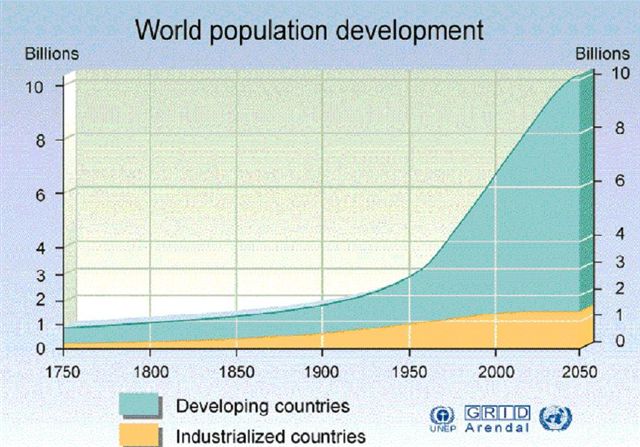
Demographic growth


Demographic growth is the increase in the size of a population due to there being more births than deaths (a positive natural balance) and more migrants entering than leaving. 
The population of the world is growing by 2.7 people per second (two people die per second). 95% of this growth is in the less developed world.
Today, approximately one in three people are under fifteen, which has huge implications for future population growth.